
mcp-notion-server
Here is a detailed explanation of the steps mentioned above in the following articles: for the Model Context Protocol. Enhance AI assistants with powerful integ
Documentation
Notion MCP Server
AI-friendly MCP server for the Notion API. It helps agents find, read, query, and update Notion workspaces while keeping responses compact enough for day-to-day AI workflows.
This server targets the Notion API `2026-03-11` and uses the current database/data source model. It exposes MCP tools, prompts, resources, structured tool results, and optional MCP Apps for interactive Notion workflows.
Highlights
- Search and target discovery with `notion_find`.
- Compact page reading with stable block IDs via `notion_read_page`.
- Data source schema inspection with `notion_inspect_data_source`.
- Schema-aware data source querying and item creation with simple values.
- Simple page editing tools for paragraphs, headings, lists, todos, quotes, callouts, code blocks, dividers, and safe Markdown append.
- Raw Notion API tools for advanced block, page, database, data source, comment, and user operations.
- Optional MCP Apps: Data Source Explorer and Page Workbench.
Quick Start
Add this server to an MCP host such as Claude Desktop:
{
  "mcpServers": {
    "notion": {
      "command": "npx",
      "args": ["-y", "@suekou/mcp-notion-server"],
      "env": {
        "NOTION_API_TOKEN": "your-integration-token"
      }
    }
  }
}
Restart your MCP host after saving the configuration.
Setup Guide
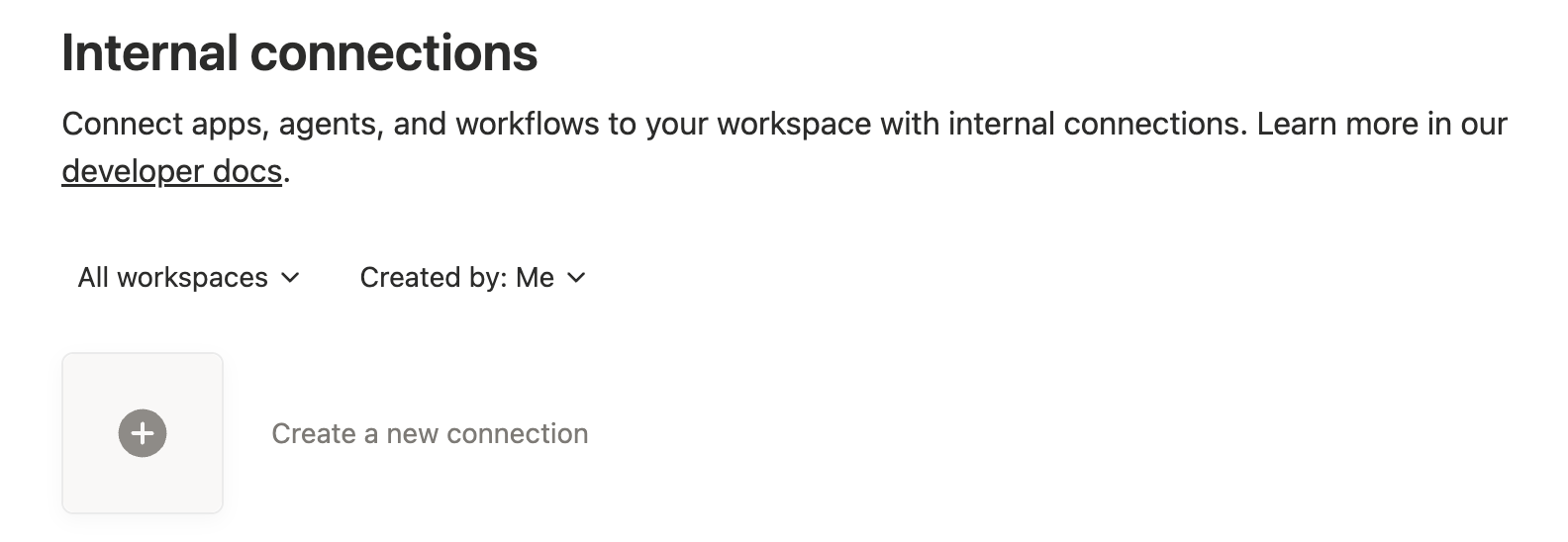
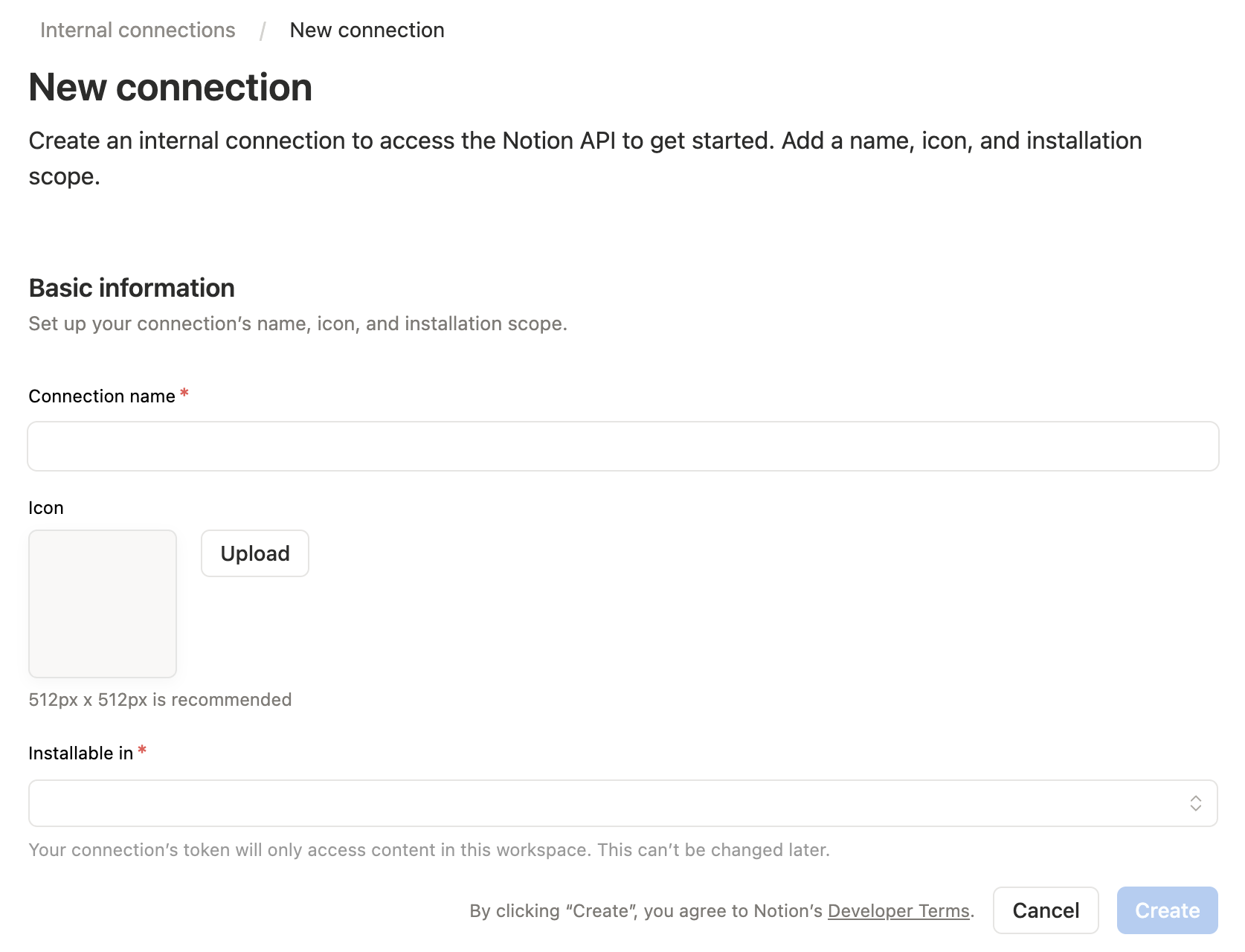
1. Create a Notion integration
Open the Notion integrations dashboard, then create a new internal integration.
2. Configure capabilities
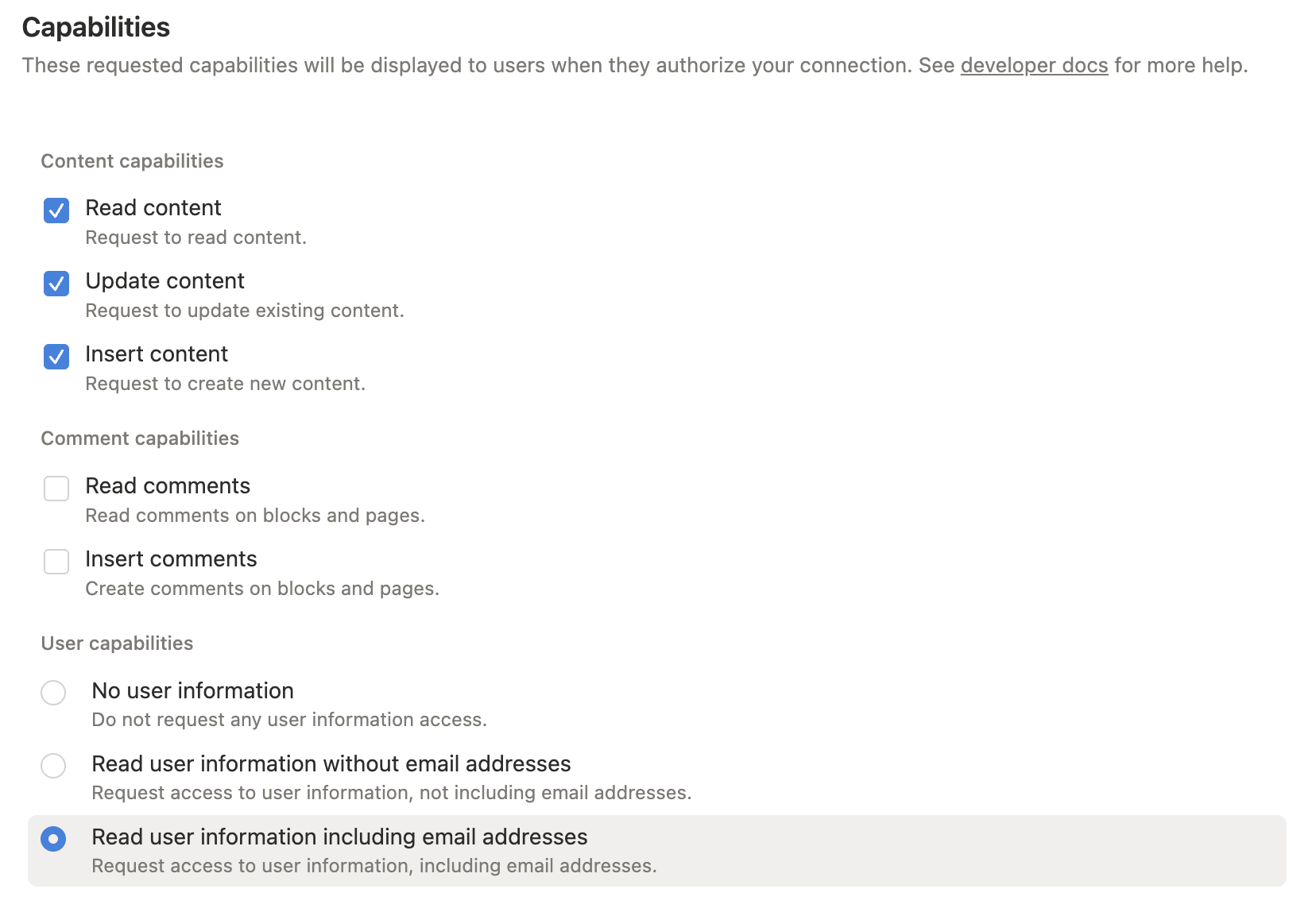
Grant only the capabilities you need:
- Read content: required for search, page reads, data source retrieval, and queries.
- Insert content: required for creating pages/items and appending blocks.
- Update content: required for updating pages, blocks, and data source schemas.
- Read comments / Insert comments: required only for comment tools.
- User information: required only when using user lookup tools.
For full functionality during setup, enable read, insert, and update content. Add comment or user capabilities only if you plan to use those tools.
3. Grant content access
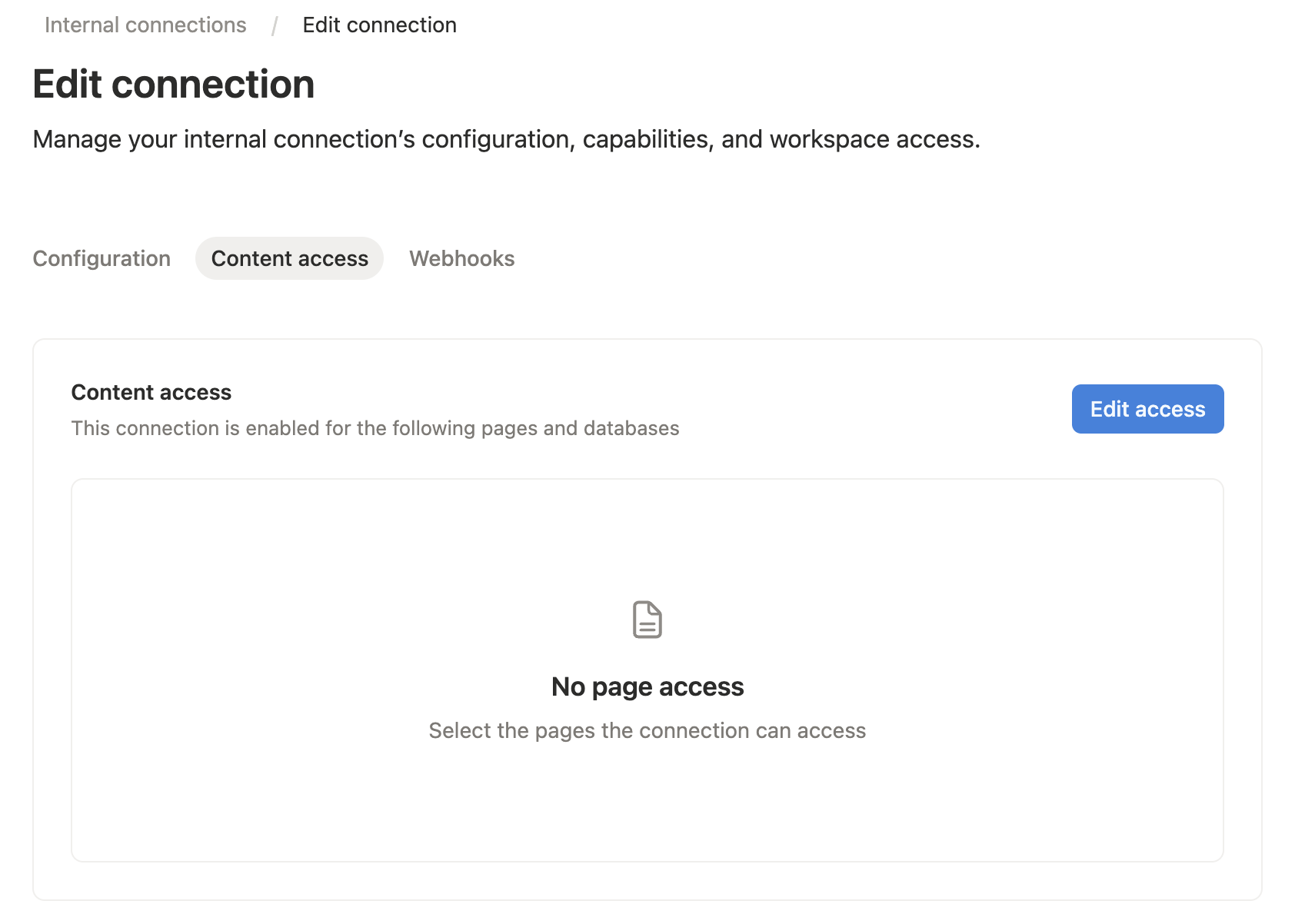
Open the Content access tab for your integration, then select the pages or databases you want the MCP server to read or edit.
You can also grant access from the target Notion page or database: open the `...` menu, choose Connections, then add your integration.
Notion only lets an integration access pages and databases that have been shared with it. A connection added to a page can also access that page's children.
4. Copy the internal integration token
Copy the integration secret. This value becomes `NOTION_API_TOKEN` in your MCP host config.

5. Configure your MCP host
For Cursor, Claude Desktop, and other MCP hosts, add this server config to your MCP settings:
{
  "mcpServers": {
    "notion": {
      "command": "npx",
      "args": ["-y", "@suekou/mcp-notion-server"],
      "env": {
        "NOTION_API_TOKEN": "secret_xxxxxxxxxxxxxxxxxxxxxxxxxxxxxxxxxxxxxxxxxxx"
      }
    }
  }
}
For a locally built checkout:
{
  "mcpServers": {
    "notion": {
      "command": "node",
      "args": ["/absolute/path/to/suekou-mcp-notion-server/build/index.js"],
      "env": {
        "NOTION_API_TOKEN": "secret_xxxxxxxxxxxxxxxxxxxxxxxxxxxxxxxxxxxxxxxxxxx"
      }
    }
  }
}
Recommended Workflow
1. Use `notion_find` to locate a page or data source.
2. Use `notion_read_page` for page context and editable block IDs.
3. Use `notion_inspect_data_source` before querying or creating data source items.
4. Use `notion_query_data_source_by_values` and `notion_create_data_source_item_from_values` for common data source work.
5. Use `notion_append_markdown`, `notion_append_content`, `notion_update_content`, or `notion_update_content_batch` for normal page edits.
6. Fall back to raw JSON tools only when the simplified tools do not cover the Notion API shape you need.
For Developers
These references are mainly for development, customization, and advanced MCP workflows:
- Configuration: environment variables, command-line arguments, MCP host examples, development commands, and troubleshooting.
- Tools: complete tool reference grouped by workflow area.
- Workflows: practical read, write, data source, migration, and error-handling guidance.
- MCP Apps: interactive Data Source Explorer and Page Workbench details.
Development
This project uses Node.js 22 or newer and pnpm.
pnpm install --frozen-lockfile
pnpm run build
pnpm test
Use the MCP inspector during local development:
pnpm run inspectorLicense
This MCP server is licensed under the MIT License. This means you are free to use, modify, and distribute the software, subject to the terms and conditions of the MIT License. For more details, please see the LICENSE file in the project repository.
Frequently asked questions
What is mcp-notion-server?
mcp-notion-server is Here is a detailed explanation of the steps mentioned above in the following articles: for the Model Context Protocol. Enhance AI assistants with powerful integ
How do I install mcp-notion-server?
Open the GitHub repository and follow its README. Most MCP servers are added to your client's MCP config, then called by your agent.
Is mcp-notion-server open source?
Yes — it is hosted on GitHub at https://github.com/suekou/mcp-notion-server and has 833 stars.
Related MCP tools
 metamcp
MCP Aggregator, Orchestrator, Middleware, Gateway in one docker TypeScript-based implementation. Trusted by 1400+ developers.
 mcp-server-kubernetes
MCP Server for kubernetes management commands TypeScript-based implementation. Trusted by 1100+ developers. Trusted by 1100+ developers.
 deepwiki-mcp
📖 MCP server for fetch deepwiki.com and get latest knowledge in Cursor and other Code Editors TypeScript-based implementation. Trusted by 1000+ developers.
 CloudBase-AI-ToolKit
🪐 Instantly generate, deploy, and host your full-stack Web apps, mini-programs, databases, and backend services with AI IDE, launch your ideas at lightning ...
 howtocook-mcp
基于Anduin2017 / HowToCook (程序员在家做饭指南)的mcp server TypeScript-based implementation. Trusted by 600+ developers. Trusted by 600+ developers.
 obsidian-mcp
A simple MCP server for Obsidian TypeScript-based implementation. Trusted by 500+ developers. Trusted by 500+ developers.
Run your own MCP server? See who uses it and what to fix.
Measure it with TrackMCP